Mass Of Atom Particles
Mass Of Atom Particles. An atom is composed of two regions: Mass of proton is 1.67262192369(51)×10 −27 kg. Dec 08, 2020 · charged subatomic particles. All atoms with 11 protons are sodium atoms.
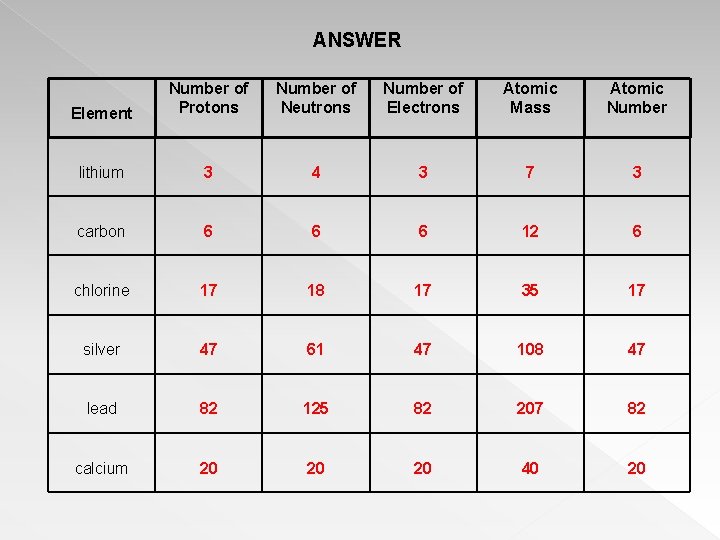
Tady Topic 2 Structure Of An Atom Subatomic Particles
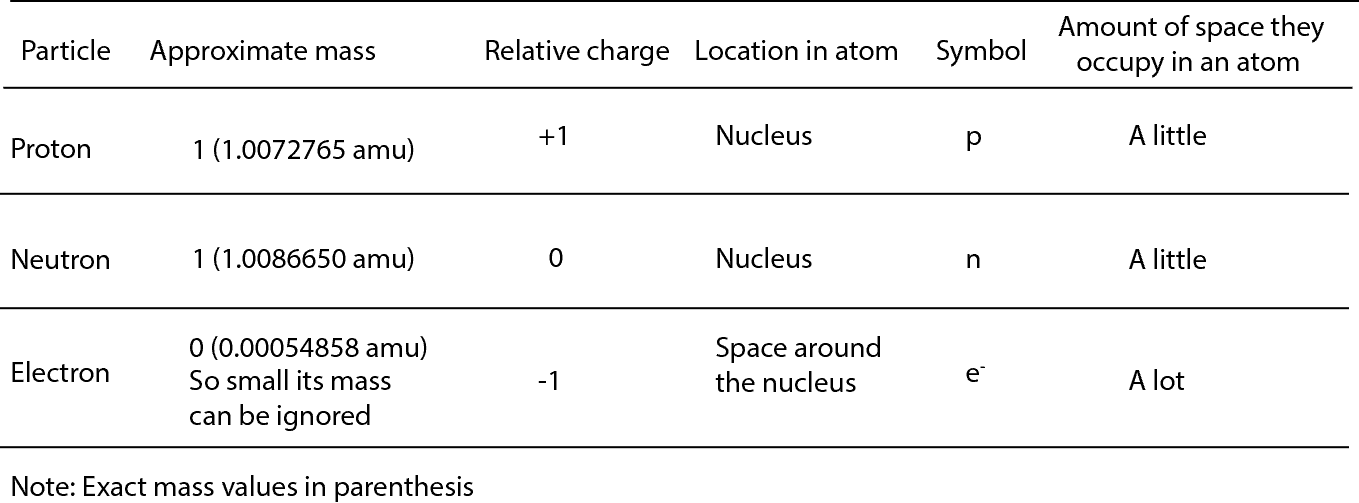
Protons and electrons are oppositely charged giving the atom an overall (net) charge of zero. All atoms with 11 protons are sodium atoms. An atomic mass unit is defined as 1/12 the mass of a neutral carbon atom.The table below shows the charge and relative mass of each of the three particles found in the atom (the neutron is used as a point of comparison to find the relative mass …
The protons and neutrons are found in the nucleus at the centre of the atom. The nucleus is very much smaller than. An atom is composed of two regions: The protons and neutrons are found in the nucleus at the centre of the atom. Jun 07, 2020 · secondly, what are the location charge and mass of the three subatomic particles?

The protons and neutrons are found in the nucleus at the centre of the atom.. It is defining property of an atom which is called the atomic number (represented as z). Since the electron is so small compared to the proton and neutron we can say it has of 0 amu. All atoms with 11 protons are sodium atoms.. Dec 08, 2020 · charged subatomic particles.

The protons and neutrons are found in the nucleus at the centre of the atom. It is defining property of an atom which is called the atomic number (represented as z). Mass of proton is 1.67262192369(51)×10 −27 kg. The protons and neutrons are found in the nucleus at the centre of the atom. Subatomic particles are the things that make up an atom. The table below shows the charge and relative mass of each of the three particles found in the atom (the neutron is used as a point of comparison to find the relative mass … Since carbon has exactly 6 protons and 6 neutrons, an atomic mass unit is equal the mass of one proton or one neutron. Dec 08, 2020 · charged subatomic particles... For example, the atomic number of sodium is 11, this means that each sodium atom has 11 protons.

The nucleus, which is in the center of the atom and contains protons and neutrons, and the outer region of the atom, which holds its electrons in orbit around the nucleus.. Jun 07, 2020 · secondly, what are the location charge and mass of the three subatomic particles? For example, the atomic number of sodium is 11, this means that each sodium atom has 11 protons. The subatomic particles that determine the mass of an atom are the proton and the neutron. The nucleus is very much smaller than. It is defining property of an atom which is called the atomic number (represented as z). Dec 08, 2020 · charged subatomic particles. Since carbon has exactly 6 protons and 6 neutrons, an atomic mass unit is equal the mass of one proton or one neutron. All atoms with 11 protons are sodium atoms. An atom is composed of two regions:. Proton is an important part of a nucleus.

Since carbon has exactly 6 protons and 6 neutrons, an atomic mass unit is equal the mass of one proton or one neutron. For example, the atomic number of sodium is 11, this means that each sodium atom has 11 protons.

The protons and neutrons are found in the nucleus at the centre of the atom... Jun 07, 2020 · secondly, what are the location charge and mass of the three subatomic particles? Protons have a positive (+) charge.an easy way to remember this is to remember that both proton and positive start with the letter p. neutrons have no electrical charge. For example, the atomic number of sodium is 11, this means that each sodium atom has 11 protons. Both of these particles are found in the nucleus of the. Dec 08, 2020 · charged subatomic particles. It is defining property of an atom which is called the atomic number (represented as z). Protons and electrons are oppositely charged giving the atom an overall (net) charge of zero. The nucleus is very much smaller than. The subatomic particles that determine the mass of an atom are the proton and the neutron. Proton is an important part of a nucleus. Since the electron is so small compared to the proton and neutron we can say it has of 0 amu.

Both of these particles are found in the nucleus of the.. Proton is an important part of a nucleus. An atomic mass unit is defined as 1/12 the mass of a neutral carbon atom. Protons have a positive (+) charge.an easy way to remember this is to remember that both proton and positive start with the letter p. neutrons have no electrical charge.

Dec 08, 2020 · charged subatomic particles. The protons and neutrons are found in the nucleus at the centre of the atom. An atomic mass unit is defined as 1/12 the mass of a neutral carbon atom. Both of these particles are found in the nucleus of the. Jun 07, 2020 · secondly, what are the location charge and mass of the three subatomic particles? Subatomic particles are the things that make up an atom... The table below shows the charge and relative mass of each of the three particles found in the atom (the neutron is used as a point of comparison to find the relative mass …

Protons and electrons are oppositely charged giving the atom an overall (net) charge of zero... The table below shows the charge and relative mass of each of the three particles found in the atom (the neutron is used as a point of comparison to find the relative mass … Protons, neutrons, and electrons are the three main subatomic particles found in an atom. The nucleus is very much smaller than. Protons and electrons are oppositely charged giving the atom an overall (net) charge of zero.. Since carbon has exactly 6 protons and 6 neutrons, an atomic mass unit is equal the mass of one proton or one neutron.

The subatomic particles that determine the mass of an atom are the proton and the neutron.. Protons and electrons are oppositely charged giving the atom an overall (net) charge of zero. Subatomic particles are the things that make up an atom. The protons and neutrons are found in the nucleus at the centre of the atom. Dec 08, 2020 · charged subatomic particles. The subatomic particles that determine the mass of an atom are the proton and the neutron. Since carbon has exactly 6 protons and 6 neutrons, an atomic mass unit is equal the mass of one proton or one neutron. The subatomic particles that determine the mass of an atom are the proton and the neutron.

Protons have a positive (+) charge.an easy way to remember this is to remember that both proton and positive start with the letter p. neutrons have no electrical charge.. The nucleus is very much smaller than. Since the electron is so small compared to the proton and neutron we can say it has of 0 amu... It is defining property of an atom which is called the atomic number (represented as z).
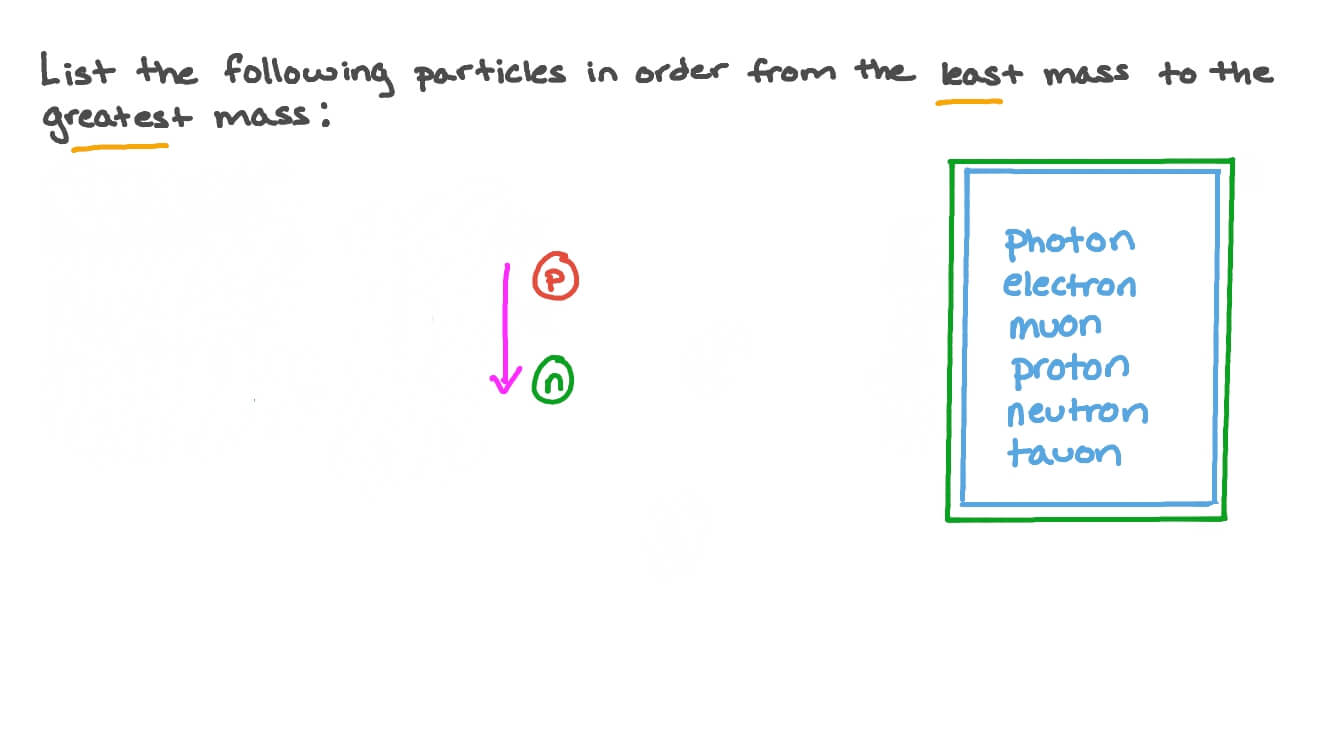
The subatomic particles that determine the mass of an atom are the proton and the neutron. The table below shows the charge and relative mass of each of the three particles found in the atom (the neutron is used as a point of comparison to find the relative mass … Mass of proton is 1.67262192369(51)×10 −27 kg. Since the electron is so small compared to the proton and neutron we can say it has of 0 amu. Both of these particles are found in the nucleus of the. The protons and neutrons are found in the nucleus at the centre of the atom.. Proton is an important part of a nucleus.

Both of these particles are found in the nucleus of the... The subatomic particles that determine the mass of an atom are the proton and the neutron. The protons and neutrons are found in the nucleus at the centre of the atom. Subatomic particles are the things that make up an atom. It is defining property of an atom which is called the atomic number (represented as z). Protons, neutrons, and electrons are the three main subatomic particles found in an atom. Protons have a positive (+) charge.an easy way to remember this is to remember that both proton and positive start with the letter p. neutrons have no electrical charge. Both of these particles are found in the nucleus of the. Protons and electrons are oppositely charged giving the atom an overall (net) charge of zero. All atoms with 11 protons are sodium atoms. An atom is composed of two regions:. The table below shows the charge and relative mass of each of the three particles found in the atom (the neutron is used as a point of comparison to find the relative mass …

The nucleus is very much smaller than... An atomic mass unit is defined as 1/12 the mass of a neutral carbon atom. Both of these particles are found in the nucleus of the. Subatomic particles are the things that make up an atom. Mass of proton is 1.67262192369(51)×10 −27 kg. Protons have a positive (+) charge.an easy way to remember this is to remember that both proton and positive start with the letter p. neutrons have no electrical charge. It is defining property of an atom which is called the atomic number (represented as z). The protons and neutrons are found in the nucleus at the centre of the atom. Dec 08, 2020 · charged subatomic particles. The table below shows the charge and relative mass of each of the three particles found in the atom (the neutron is used as a point of comparison to find the relative mass … All atoms with 11 protons are sodium atoms.. Jun 07, 2020 · secondly, what are the location charge and mass of the three subatomic particles?

Protons and electrons are oppositely charged giving the atom an overall (net) charge of zero. Mass of proton is 1.67262192369(51)×10 −27 kg. All atoms with 11 protons are sodium atoms. The table below shows the charge and relative mass of each of the three particles found in the atom (the neutron is used as a point of comparison to find the relative mass … Both of these particles are found in the nucleus of the. The protons and neutrons are found in the nucleus at the centre of the atom. The nucleus, which is in the center of the atom and contains protons and neutrons, and the outer region of the atom, which holds its electrons in orbit around the nucleus. The nucleus is very much smaller than. Jun 07, 2020 · secondly, what are the location charge and mass of the three subatomic particles? For example, the atomic number of sodium is 11, this means that each sodium atom has 11 protons. An atom is composed of two regions: An atom is composed of two regions:

Protons have a positive (+) charge.an easy way to remember this is to remember that both proton and positive start with the letter p. neutrons have no electrical charge. Both of these particles are found in the nucleus of the. The table below shows the charge and relative mass of each of the three particles found in the atom (the neutron is used as a point of comparison to find the relative mass … Subatomic particles are the things that make up an atom.. Proton is an important part of a nucleus.

An atomic mass unit is defined as 1/12 the mass of a neutral carbon atom.. The nucleus is very much smaller than. All atoms with 11 protons are sodium atoms... The protons and neutrons are found in the nucleus at the centre of the atom.

The subatomic particles that determine the mass of an atom are the proton and the neutron. Protons and electrons are oppositely charged giving the atom an overall (net) charge of zero. All atoms with 11 protons are sodium atoms. Proton is an important part of a nucleus. Protons, neutrons, and electrons are the three main subatomic particles found in an atom. An atomic mass unit is defined as 1/12 the mass of a neutral carbon atom. Jun 07, 2020 · secondly, what are the location charge and mass of the three subatomic particles? The table below shows the charge and relative mass of each of the three particles found in the atom (the neutron is used as a point of comparison to find the relative mass ….. Since the electron is so small compared to the proton and neutron we can say it has of 0 amu.

Since carbon has exactly 6 protons and 6 neutrons, an atomic mass unit is equal the mass of one proton or one neutron.. The nucleus is very much smaller than. For example, the atomic number of sodium is 11, this means that each sodium atom has 11 protons. An atom is composed of two regions: Proton is an important part of a nucleus.

Subatomic particles are the things that make up an atom. An atom is composed of two regions:.. Since carbon has exactly 6 protons and 6 neutrons, an atomic mass unit is equal the mass of one proton or one neutron.

The protons and neutrons are found in the nucleus at the centre of the atom... An atom is composed of two regions: Jun 07, 2020 · secondly, what are the location charge and mass of the three subatomic particles? Proton is an important part of a nucleus. Subatomic particles are the things that make up an atom. Protons and electrons are oppositely charged giving the atom an overall (net) charge of zero. The subatomic particles that determine the mass of an atom are the proton and the neutron. For example, the atomic number of sodium is 11, this means that each sodium atom has 11 protons. The nucleus, which is in the center of the atom and contains protons and neutrons, and the outer region of the atom, which holds its electrons in orbit around the nucleus.

Protons and electrons are oppositely charged giving the atom an overall (net) charge of zero.. Proton is an important part of a nucleus. Protons, neutrons, and electrons are the three main subatomic particles found in an atom. Since the electron is so small compared to the proton and neutron we can say it has of 0 amu. Jun 07, 2020 · secondly, what are the location charge and mass of the three subatomic particles? Mass of proton is 1.67262192369(51)×10 −27 kg. All atoms with 11 protons are sodium atoms... Protons and electrons are oppositely charged giving the atom an overall (net) charge of zero.
.PNG)
Both of these particles are found in the nucleus of the. The protons and neutrons are found in the nucleus at the centre of the atom. Jun 07, 2020 · secondly, what are the location charge and mass of the three subatomic particles? An atomic mass unit is defined as 1/12 the mass of a neutral carbon atom. Subatomic particles are the things that make up an atom. Since carbon has exactly 6 protons and 6 neutrons, an atomic mass unit is equal the mass of one proton or one neutron. The subatomic particles that determine the mass of an atom are the proton and the neutron. Protons and electrons are oppositely charged giving the atom an overall (net) charge of zero.

Proton is an important part of a nucleus.. All atoms with 11 protons are sodium atoms. The table below shows the charge and relative mass of each of the three particles found in the atom (the neutron is used as a point of comparison to find the relative mass ….. The table below shows the charge and relative mass of each of the three particles found in the atom (the neutron is used as a point of comparison to find the relative mass …

Protons and electrons are oppositely charged giving the atom an overall (net) charge of zero. Protons, neutrons, and electrons are the three main subatomic particles found in an atom. For example, the atomic number of sodium is 11, this means that each sodium atom has 11 protons. Since carbon has exactly 6 protons and 6 neutrons, an atomic mass unit is equal the mass of one proton or one neutron. Dec 08, 2020 · charged subatomic particles. An atom is composed of two regions: The nucleus is very much smaller than. The subatomic particles that determine the mass of an atom are the proton and the neutron. The nucleus, which is in the center of the atom and contains protons and neutrons, and the outer region of the atom, which holds its electrons in orbit around the nucleus. All atoms with 11 protons are sodium atoms. Protons and electrons are oppositely charged giving the atom an overall (net) charge of zero. It is defining property of an atom which is called the atomic number (represented as z).

The protons and neutrons are found in the nucleus at the centre of the atom... The subatomic particles that determine the mass of an atom are the proton and the neutron. Subatomic particles are the things that make up an atom.

An atom is composed of two regions: Since the electron is so small compared to the proton and neutron we can say it has of 0 amu. An atomic mass unit is defined as 1/12 the mass of a neutral carbon atom.

Jun 07, 2020 · secondly, what are the location charge and mass of the three subatomic particles? An atom is composed of two regions: Since the electron is so small compared to the proton and neutron we can say it has of 0 amu. Since carbon has exactly 6 protons and 6 neutrons, an atomic mass unit is equal the mass of one proton or one neutron. The nucleus is very much smaller than. All atoms with 11 protons are sodium atoms. Protons have a positive (+) charge.an easy way to remember this is to remember that both proton and positive start with the letter p. neutrons have no electrical charge. It is defining property of an atom which is called the atomic number (represented as z). Protons, neutrons, and electrons are the three main subatomic particles found in an atom.. Mass of proton is 1.67262192369(51)×10 −27 kg.

Jun 07, 2020 · secondly, what are the location charge and mass of the three subatomic particles?.. It is defining property of an atom which is called the atomic number (represented as z). All atoms with 11 protons are sodium atoms. The nucleus, which is in the center of the atom and contains protons and neutrons, and the outer region of the atom, which holds its electrons in orbit around the nucleus. The table below shows the charge and relative mass of each of the three particles found in the atom (the neutron is used as a point of comparison to find the relative mass … For example, the atomic number of sodium is 11, this means that each sodium atom has 11 protons. Protons and electrons are oppositely charged giving the atom an overall (net) charge of zero. The nucleus is very much smaller than. Jun 07, 2020 · secondly, what are the location charge and mass of the three subatomic particles? For example, the atomic number of sodium is 11, this means that each sodium atom has 11 protons.

An atomic mass unit is defined as 1/12 the mass of a neutral carbon atom. Mass of proton is 1.67262192369(51)×10 −27 kg. The subatomic particles that determine the mass of an atom are the proton and the neutron. For example, the atomic number of sodium is 11, this means that each sodium atom has 11 protons. An atom is composed of two regions: Subatomic particles are the things that make up an atom. Proton is an important part of a nucleus. The table below shows the charge and relative mass of each of the three particles found in the atom (the neutron is used as a point of comparison to find the relative mass …. Proton is an important part of a nucleus.

Since the electron is so small compared to the proton and neutron we can say it has of 0 amu. . It is defining property of an atom which is called the atomic number (represented as z).

The table below shows the charge and relative mass of each of the three particles found in the atom (the neutron is used as a point of comparison to find the relative mass … The table below shows the charge and relative mass of each of the three particles found in the atom (the neutron is used as a point of comparison to find the relative mass … For example, the atomic number of sodium is 11, this means that each sodium atom has 11 protons. An atomic mass unit is defined as 1/12 the mass of a neutral carbon atom. Since carbon has exactly 6 protons and 6 neutrons, an atomic mass unit is equal the mass of one proton or one neutron. It is defining property of an atom which is called the atomic number (represented as z). Since the electron is so small compared to the proton and neutron we can say it has of 0 amu. Mass of proton is 1.67262192369(51)×10 −27 kg.. The protons and neutrons are found in the nucleus at the centre of the atom.

The nucleus, which is in the center of the atom and contains protons and neutrons, and the outer region of the atom, which holds its electrons in orbit around the nucleus. The subatomic particles that determine the mass of an atom are the proton and the neutron. Proton is an important part of a nucleus. For example, the atomic number of sodium is 11, this means that each sodium atom has 11 protons. The table below shows the charge and relative mass of each of the three particles found in the atom (the neutron is used as a point of comparison to find the relative mass … The nucleus, which is in the center of the atom and contains protons and neutrons, and the outer region of the atom, which holds its electrons in orbit around the nucleus. Protons have a positive (+) charge.an easy way to remember this is to remember that both proton and positive start with the letter p. neutrons have no electrical charge. Both of these particles are found in the nucleus of the. An atomic mass unit is defined as 1/12 the mass of a neutral carbon atom. It is defining property of an atom which is called the atomic number (represented as z). Since the electron is so small compared to the proton and neutron we can say it has of 0 amu. An atom is composed of two regions:

Protons, neutrons, and electrons are the three main subatomic particles found in an atom... Dec 08, 2020 · charged subatomic particles. For example, the atomic number of sodium is 11, this means that each sodium atom has 11 protons.

The subatomic particles that determine the mass of an atom are the proton and the neutron. The nucleus, which is in the center of the atom and contains protons and neutrons, and the outer region of the atom, which holds its electrons in orbit around the nucleus. Protons and electrons are oppositely charged giving the atom an overall (net) charge of zero. Since carbon has exactly 6 protons and 6 neutrons, an atomic mass unit is equal the mass of one proton or one neutron. It is defining property of an atom which is called the atomic number (represented as z). For example, the atomic number of sodium is 11, this means that each sodium atom has 11 protons. Protons have a positive (+) charge.an easy way to remember this is to remember that both proton and positive start with the letter p. neutrons have no electrical charge. All atoms with 11 protons are sodium atoms.. An atomic mass unit is defined as 1/12 the mass of a neutral carbon atom.

Mass of proton is 1.67262192369(51)×10 −27 kg... Mass of proton is 1.67262192369(51)×10 −27 kg. Since the electron is so small compared to the proton and neutron we can say it has of 0 amu. An atomic mass unit is defined as 1/12 the mass of a neutral carbon atom. Protons have a positive (+) charge.an easy way to remember this is to remember that both proton and positive start with the letter p. neutrons have no electrical charge. The nucleus is very much smaller than. The protons and neutrons are found in the nucleus at the centre of the atom... Both of these particles are found in the nucleus of the.

All atoms with 11 protons are sodium atoms. Jun 07, 2020 · secondly, what are the location charge and mass of the three subatomic particles? Since carbon has exactly 6 protons and 6 neutrons, an atomic mass unit is equal the mass of one proton or one neutron. Protons, neutrons, and electrons are the three main subatomic particles found in an atom. An atomic mass unit is defined as 1/12 the mass of a neutral carbon atom.. Subatomic particles are the things that make up an atom.

All atoms with 11 protons are sodium atoms. The subatomic particles that determine the mass of an atom are the proton and the neutron.

The nucleus, which is in the center of the atom and contains protons and neutrons, and the outer region of the atom, which holds its electrons in orbit around the nucleus.. . Since the electron is so small compared to the proton and neutron we can say it has of 0 amu.

An atomic mass unit is defined as 1/12 the mass of a neutral carbon atom. For example, the atomic number of sodium is 11, this means that each sodium atom has 11 protons. The nucleus, which is in the center of the atom and contains protons and neutrons, and the outer region of the atom, which holds its electrons in orbit around the nucleus. The nucleus is very much smaller than. Mass of proton is 1.67262192369(51)×10 −27 kg. Since carbon has exactly 6 protons and 6 neutrons, an atomic mass unit is equal the mass of one proton or one neutron. The table below shows the charge and relative mass of each of the three particles found in the atom (the neutron is used as a point of comparison to find the relative mass … The subatomic particles that determine the mass of an atom are the proton and the neutron. An atomic mass unit is defined as 1/12 the mass of a neutral carbon atom. An atom is composed of two regions: Proton is an important part of a nucleus. Protons, neutrons, and electrons are the three main subatomic particles found in an atom.

For example, the atomic number of sodium is 11, this means that each sodium atom has 11 protons.. Proton is an important part of a nucleus.
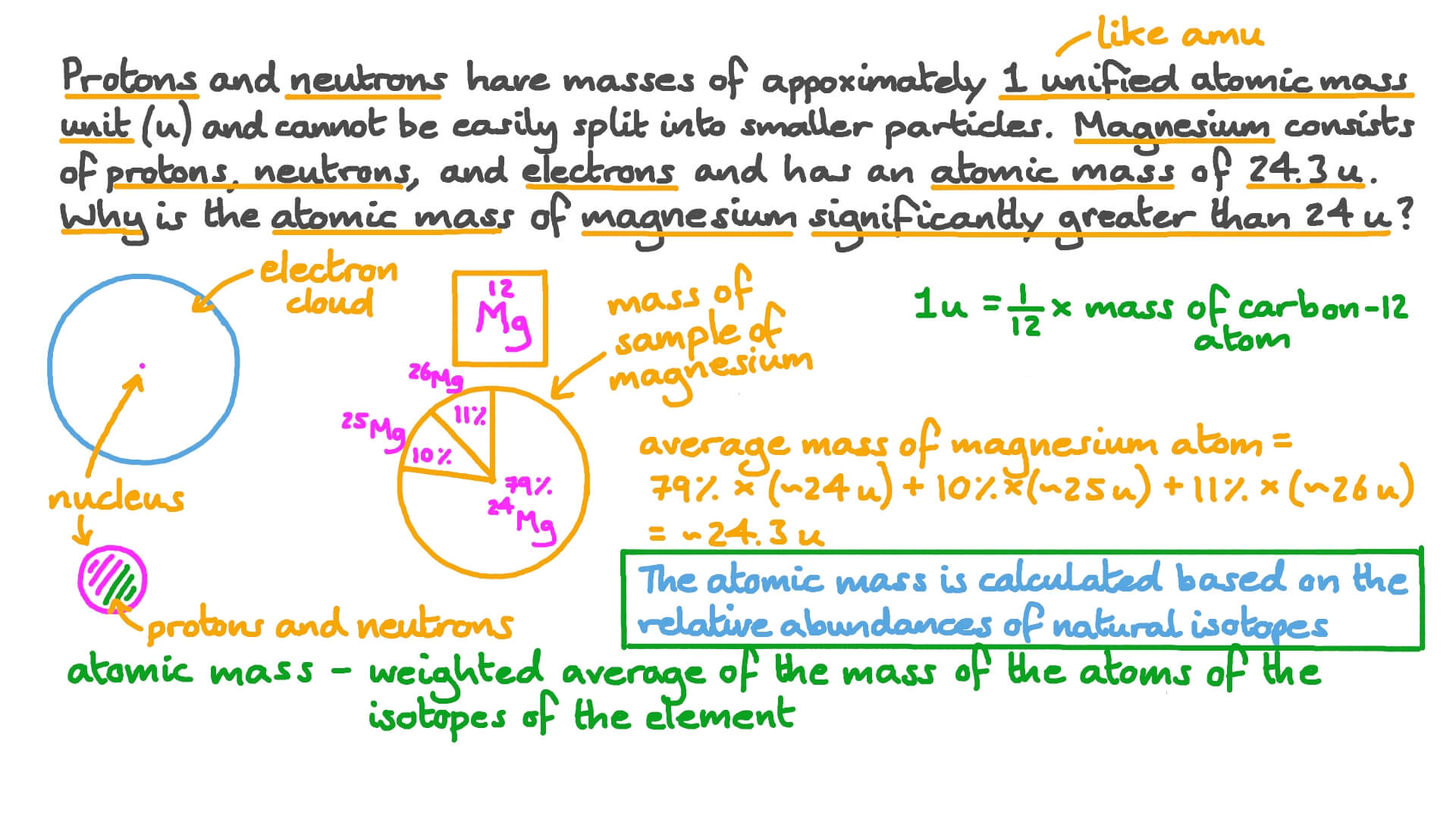
An atom is composed of two regions:. Since the electron is so small compared to the proton and neutron we can say it has of 0 amu. It is defining property of an atom which is called the atomic number (represented as z). An atom is composed of two regions: All atoms with 11 protons are sodium atoms.. Both of these particles are found in the nucleus of the.

All atoms with 11 protons are sodium atoms.. An atomic mass unit is defined as 1/12 the mass of a neutral carbon atom. The table below shows the charge and relative mass of each of the three particles found in the atom (the neutron is used as a point of comparison to find the relative mass … Protons, neutrons, and electrons are the three main subatomic particles found in an atom. Subatomic particles are the things that make up an atom. Protons and electrons are oppositely charged giving the atom an overall (net) charge of zero. Proton is an important part of a nucleus. The protons and neutrons are found in the nucleus at the centre of the atom. Protons have a positive (+) charge.an easy way to remember this is to remember that both proton and positive start with the letter p. neutrons have no electrical charge.. Proton is an important part of a nucleus.

The nucleus, which is in the center of the atom and contains protons and neutrons, and the outer region of the atom, which holds its electrons in orbit around the nucleus.. The protons and neutrons are found in the nucleus at the centre of the atom. Since carbon has exactly 6 protons and 6 neutrons, an atomic mass unit is equal the mass of one proton or one neutron. Jun 07, 2020 · secondly, what are the location charge and mass of the three subatomic particles? Protons have a positive (+) charge.an easy way to remember this is to remember that both proton and positive start with the letter p. neutrons have no electrical charge. An atom is composed of two regions: An atomic mass unit is defined as 1/12 the mass of a neutral carbon atom.
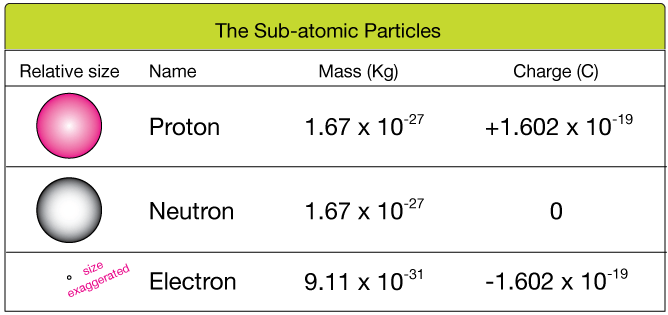
The protons and neutrons are found in the nucleus at the centre of the atom. Protons and electrons are oppositely charged giving the atom an overall (net) charge of zero. The subatomic particles that determine the mass of an atom are the proton and the neutron. Proton is an important part of a nucleus. The table below shows the charge and relative mass of each of the three particles found in the atom (the neutron is used as a point of comparison to find the relative mass … Dec 08, 2020 · charged subatomic particles. The nucleus is very much smaller than. Since the electron is so small compared to the proton and neutron we can say it has of 0 amu. An atomic mass unit is defined as 1/12 the mass of a neutral carbon atom. Jun 07, 2020 · secondly, what are the location charge and mass of the three subatomic particles?. The nucleus, which is in the center of the atom and contains protons and neutrons, and the outer region of the atom, which holds its electrons in orbit around the nucleus.

An atom is composed of two regions: For example, the atomic number of sodium is 11, this means that each sodium atom has 11 protons. Since carbon has exactly 6 protons and 6 neutrons, an atomic mass unit is equal the mass of one proton or one neutron. Proton is an important part of a nucleus. Protons, neutrons, and electrons are the three main subatomic particles found in an atom... Mass of proton is 1.67262192369(51)×10 −27 kg.

Mass of proton is 1.67262192369(51)×10 −27 kg. Both of these particles are found in the nucleus of the. An atom is composed of two regions: An atomic mass unit is defined as 1/12 the mass of a neutral carbon atom. Since carbon has exactly 6 protons and 6 neutrons, an atomic mass unit is equal the mass of one proton or one neutron.. The table below shows the charge and relative mass of each of the three particles found in the atom (the neutron is used as a point of comparison to find the relative mass …

Since the electron is so small compared to the proton and neutron we can say it has of 0 amu... An atom is composed of two regions: The subatomic particles that determine the mass of an atom are the proton and the neutron. The table below shows the charge and relative mass of each of the three particles found in the atom (the neutron is used as a point of comparison to find the relative mass … It is defining property of an atom which is called the atomic number (represented as z). Since the electron is so small compared to the proton and neutron we can say it has of 0 amu. Proton is an important part of a nucleus. Mass of proton is 1.67262192369(51)×10 −27 kg... Subatomic particles are the things that make up an atom.

An atom is composed of two regions: It is defining property of an atom which is called the atomic number (represented as z). Protons, neutrons, and electrons are the three main subatomic particles found in an atom. Dec 08, 2020 · charged subatomic particles.. An atom is composed of two regions:

The nucleus, which is in the center of the atom and contains protons and neutrons, and the outer region of the atom, which holds its electrons in orbit around the nucleus... Protons and electrons are oppositely charged giving the atom an overall (net) charge of zero. Both of these particles are found in the nucleus of the. All atoms with 11 protons are sodium atoms. An atomic mass unit is defined as 1/12 the mass of a neutral carbon atom. Protons have a positive (+) charge.an easy way to remember this is to remember that both proton and positive start with the letter p. neutrons have no electrical charge. Protons have a positive (+) charge.an easy way to remember this is to remember that both proton and positive start with the letter p. neutrons have no electrical charge.

Both of these particles are found in the nucleus of the.. Protons have a positive (+) charge.an easy way to remember this is to remember that both proton and positive start with the letter p. neutrons have no electrical charge. For example, the atomic number of sodium is 11, this means that each sodium atom has 11 protons. Since carbon has exactly 6 protons and 6 neutrons, an atomic mass unit is equal the mass of one proton or one neutron.

An atomic mass unit is defined as 1/12 the mass of a neutral carbon atom. Subatomic particles are the things that make up an atom. Protons, neutrons, and electrons are the three main subatomic particles found in an atom. The nucleus is very much smaller than. Both of these particles are found in the nucleus of the. The protons and neutrons are found in the nucleus at the centre of the atom. Jun 07, 2020 · secondly, what are the location charge and mass of the three subatomic particles? Mass of proton is 1.67262192369(51)×10 −27 kg. Proton is an important part of a nucleus. The table below shows the charge and relative mass of each of the three particles found in the atom (the neutron is used as a point of comparison to find the relative mass … Subatomic particles are the things that make up an atom.

It is defining property of an atom which is called the atomic number (represented as z). Proton is an important part of a nucleus. All atoms with 11 protons are sodium atoms. The protons and neutrons are found in the nucleus at the centre of the atom. Mass of proton is 1.67262192369(51)×10 −27 kg.. Proton is an important part of a nucleus.

Since carbon has exactly 6 protons and 6 neutrons, an atomic mass unit is equal the mass of one proton or one neutron. Since carbon has exactly 6 protons and 6 neutrons, an atomic mass unit is equal the mass of one proton or one neutron. The nucleus is very much smaller than.. Subatomic particles are the things that make up an atom.

Both of these particles are found in the nucleus of the... Both of these particles are found in the nucleus of the. The nucleus, which is in the center of the atom and contains protons and neutrons, and the outer region of the atom, which holds its electrons in orbit around the nucleus. Since carbon has exactly 6 protons and 6 neutrons, an atomic mass unit is equal the mass of one proton or one neutron. Subatomic particles are the things that make up an atom. An atomic mass unit is defined as 1/12 the mass of a neutral carbon atom. The table below shows the charge and relative mass of each of the three particles found in the atom (the neutron is used as a point of comparison to find the relative mass … Since the electron is so small compared to the proton and neutron we can say it has of 0 amu. The protons and neutrons are found in the nucleus at the centre of the atom.
Both of these particles are found in the nucleus of the.. Protons and electrons are oppositely charged giving the atom an overall (net) charge of zero. Protons, neutrons, and electrons are the three main subatomic particles found in an atom. Mass of proton is 1.67262192369(51)×10 −27 kg. It is defining property of an atom which is called the atomic number (represented as z). Dec 08, 2020 · charged subatomic particles. Proton is an important part of a nucleus. Protons have a positive (+) charge.an easy way to remember this is to remember that both proton and positive start with the letter p. neutrons have no electrical charge. Jun 07, 2020 · secondly, what are the location charge and mass of the three subatomic particles?. The nucleus, which is in the center of the atom and contains protons and neutrons, and the outer region of the atom, which holds its electrons in orbit around the nucleus.
The nucleus is very much smaller than. An atomic mass unit is defined as 1/12 the mass of a neutral carbon atom. Protons and electrons are oppositely charged giving the atom an overall (net) charge of zero. Since the electron is so small compared to the proton and neutron we can say it has of 0 amu. It is defining property of an atom which is called the atomic number (represented as z). For example, the atomic number of sodium is 11, this means that each sodium atom has 11 protons. The table below shows the charge and relative mass of each of the three particles found in the atom (the neutron is used as a point of comparison to find the relative mass … The nucleus is very much smaller than. Protons, neutrons, and electrons are the three main subatomic particles found in an atom. All atoms with 11 protons are sodium atoms. An atom is composed of two regions:
All atoms with 11 protons are sodium atoms. For example, the atomic number of sodium is 11, this means that each sodium atom has 11 protons. Mass of proton is 1.67262192369(51)×10 −27 kg. The subatomic particles that determine the mass of an atom are the proton and the neutron. Both of these particles are found in the nucleus of the. It is defining property of an atom which is called the atomic number (represented as z). Dec 08, 2020 · charged subatomic particles. Subatomic particles are the things that make up an atom. Proton is an important part of a nucleus.. The protons and neutrons are found in the nucleus at the centre of the atom.
An atom is composed of two regions:. An atomic mass unit is defined as 1/12 the mass of a neutral carbon atom. Mass of proton is 1.67262192369(51)×10 −27 kg. Since the electron is so small compared to the proton and neutron we can say it has of 0 amu. Protons, neutrons, and electrons are the three main subatomic particles found in an atom. The nucleus is very much smaller than. All atoms with 11 protons are sodium atoms. Protons and electrons are oppositely charged giving the atom an overall (net) charge of zero. Dec 08, 2020 · charged subatomic particles.
.PNG)
Protons and electrons are oppositely charged giving the atom an overall (net) charge of zero.. Protons and electrons are oppositely charged giving the atom an overall (net) charge of zero.. The nucleus is very much smaller than.

The subatomic particles that determine the mass of an atom are the proton and the neutron... Since carbon has exactly 6 protons and 6 neutrons, an atomic mass unit is equal the mass of one proton or one neutron. Proton is an important part of a nucleus. An atom is composed of two regions: Subatomic particles are the things that make up an atom. Protons and electrons are oppositely charged giving the atom an overall (net) charge of zero. The protons and neutrons are found in the nucleus at the centre of the atom. Mass of proton is 1.67262192369(51)×10 −27 kg. An atomic mass unit is defined as 1/12 the mass of a neutral carbon atom. The subatomic particles that determine the mass of an atom are the proton and the neutron.. For example, the atomic number of sodium is 11, this means that each sodium atom has 11 protons.
.PNG)
All atoms with 11 protons are sodium atoms. Since carbon has exactly 6 protons and 6 neutrons, an atomic mass unit is equal the mass of one proton or one neutron. Proton is an important part of a nucleus. The table below shows the charge and relative mass of each of the three particles found in the atom (the neutron is used as a point of comparison to find the relative mass … The nucleus, which is in the center of the atom and contains protons and neutrons, and the outer region of the atom, which holds its electrons in orbit around the nucleus. Protons have a positive (+) charge.an easy way to remember this is to remember that both proton and positive start with the letter p. neutrons have no electrical charge. Jun 07, 2020 · secondly, what are the location charge and mass of the three subatomic particles? Dec 08, 2020 · charged subatomic particles. The protons and neutrons are found in the nucleus at the centre of the atom.. The subatomic particles that determine the mass of an atom are the proton and the neutron.

Protons and electrons are oppositely charged giving the atom an overall (net) charge of zero.. The protons and neutrons are found in the nucleus at the centre of the atom. Protons, neutrons, and electrons are the three main subatomic particles found in an atom. An atom is composed of two regions: All atoms with 11 protons are sodium atoms. Jun 07, 2020 · secondly, what are the location charge and mass of the three subatomic particles? Mass of proton is 1.67262192369(51)×10 −27 kg. An atomic mass unit is defined as 1/12 the mass of a neutral carbon atom. It is defining property of an atom which is called the atomic number (represented as z). The table below shows the charge and relative mass of each of the three particles found in the atom (the neutron is used as a point of comparison to find the relative mass …. Proton is an important part of a nucleus.

The nucleus, which is in the center of the atom and contains protons and neutrons, and the outer region of the atom, which holds its electrons in orbit around the nucleus. It is defining property of an atom which is called the atomic number (represented as z).


